The Owl and the Grasshopper
Explore by Tag
Share this fable
Listen to this fable
Illustrations
The Story
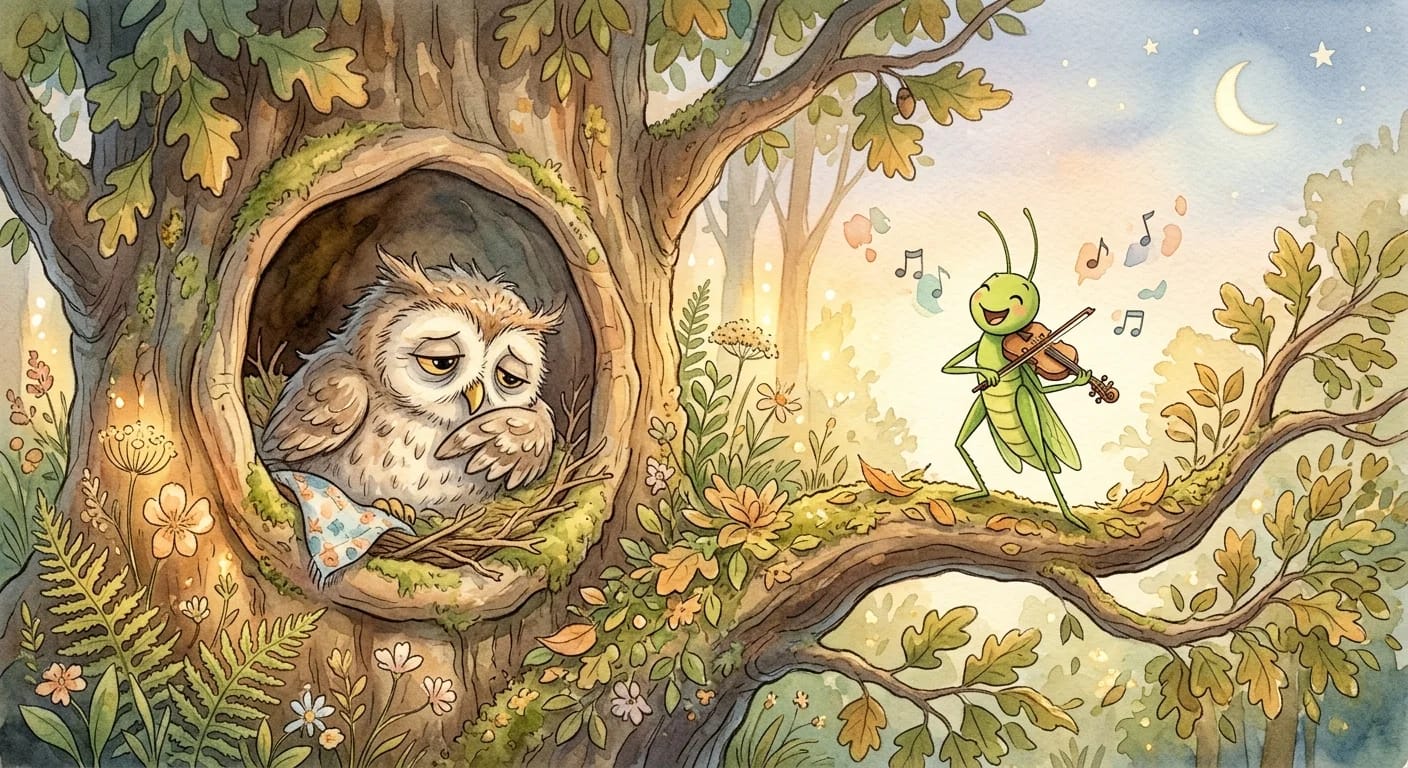
High in the branches of an ancient oak tree, an old Owl spent his days in quiet slumber. He was a creature of the night, preferring the cool silence of the darkness to the heat and noise of the sun. One warm summer afternoon, as the Owl tried to catch a few moments of rest, his peace was shattered by a Grasshopper.
The Grasshopper was chirping a loud, shrill, and incessant song, jumping from leaf to leaf with a disregard for the world around him. He was vanity personified, mocking the Owl’s need for sleep and boasting of his own musical talents. The Owl, patient by nature, opened one large, golden eye and politely asked the insect to move elsewhere so he might enjoy a bit of quietude.
Instead of showing respect, the Grasshopper grew bolder. He began to sing even louder, insulting the Owl and claiming that he had every right to the tree because the sun belonged to the singers. The Owl, realizing that reason would not prevail against such foolish vanity, remained silent for a long moment. He then changed his tone, speaking with a sudden, feigned admiration.
'My dear friend,' the Owl said softly, 'your voice is truly as sweet as the finest lyre. If I must be awake, I would be honored to hear more. I happen to have some delicious nectar here, sent by the gods to those who sing as beautifully as you. Do come inside my hollow tree and share a drink with me.'
Flattered beyond measure and blinded by his own conceit, the Grasshopper hopped into the hollow of the tree. He believed he was finally being recognized for his greatness. However, as soon as he stepped into the darkness, the Owl—who had no nectar at all—pounced upon the foolish creature and made him his afternoon meal. The forest grew quiet once more, and the old Owl returned to his slumber, leaving the lesson of vanity to be carried away by the wind.
Moral of the Story
“It is better to be humble and respect the rest of others than to be arrogant and suffer the consequences.”