The Fox Without a Tail
Explore by Tag
Share this fable
Listen to this fable
Illustrations
The Story
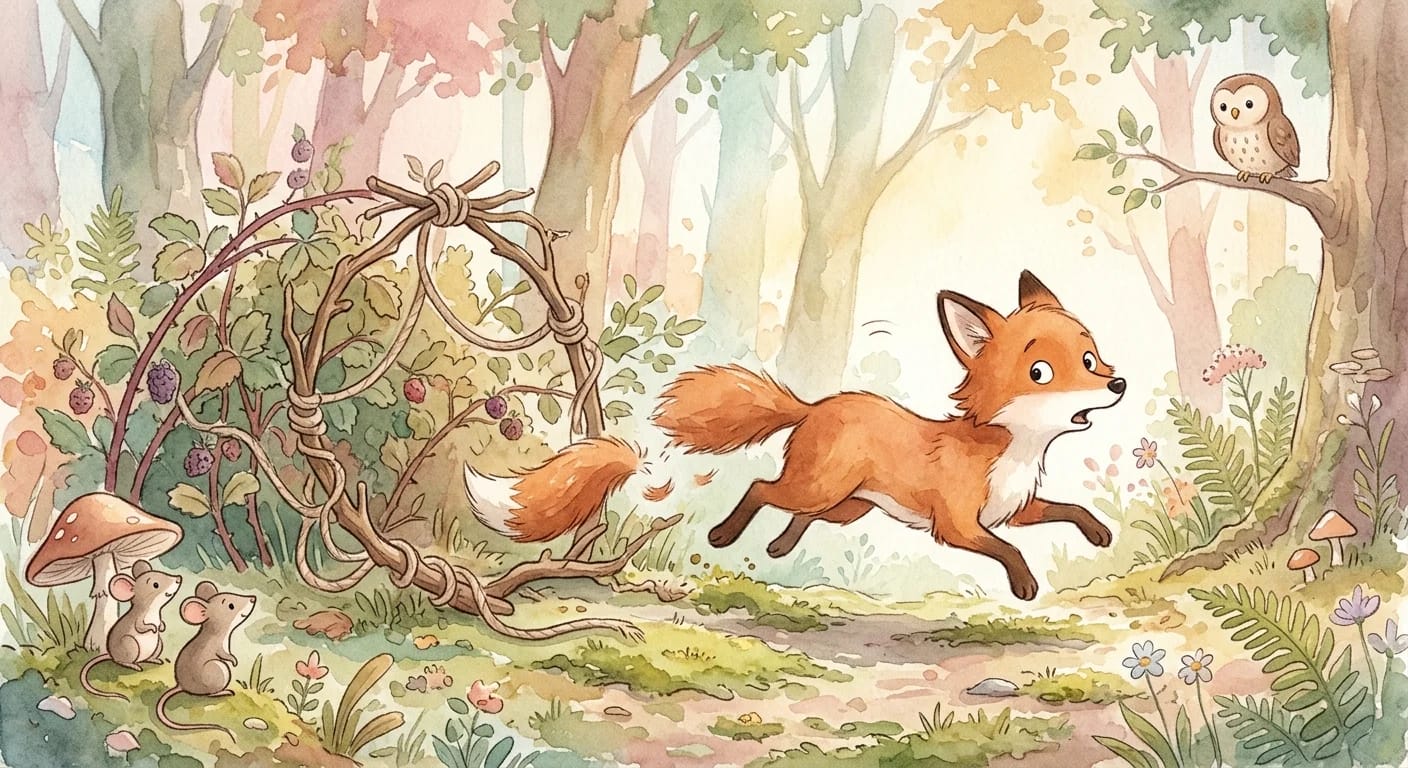
A clever fox was once caught in a hunter’s steel trap. He struggled with all his might, twisting and pulling until he finally broke free, but at a terrible price: he left his magnificent, bushy tail behind in the trap. As he limped away into the safety of the deep forest, the fox felt a deep sense of shame. He was no longer the handsome creature he once was, and he feared that his fellow foxes would mock his ragged appearance.
After a long period of contemplation, he devised a cunning plan to restore his pride. He gathered all the foxes of the region for a grand assembly. When they had all gathered, he stood upon a high rock, puffing out his chest to look as dignified as possible. 'My dear friends,' he began, his voice smooth and persuasive, 'I have made a discovery of great importance. Why do we carry these long, heavy, and unnecessary tails? They are nothing but a burden that slows our pace and catches in the brush. I have cut mine off, and I have never felt more swift or elegant. I advise you all to do the same.'
He spoke with such passion that many of the younger foxes began to wonder if he was right. They looked at their own tails, which suddenly seemed cumbersome in comparison to his newfound lightness. The assembly grew restless, murmuring in agreement, until an old, wise fox stood up from the back of the crowd. He looked at the tailless fox with a twinkle in his eye and said, 'My friend, your words are very persuasive, but I suspect that if you still had your tail, you would not be so eager to convince us to part with ours.'
The crowd erupted in laughter, and the tailless fox, seeing that his trick had failed, slunk away in silence, his deception laid bare for all to see. He learned that while he could hide his own misfortune, he could not use it to manipulate the wisdom of others.
Moral of the Story
“Do not be misled by those who try to persuade you to follow their mistakes simply because they wish to cover their own shortcomings.”